


Evaluating Drivetrain Demands and Chain Fit
Drivetrain compatibility issues cause annoying gear skips, premature cog wear, and frustrating chain drops when a replacement chain does not match your cassette width. Selecting a best selling reliable chain bike component means you must first confirm the exact speed count and link measurement of your current setup. A single-speed cruiser chain won’t squeeze between the tight cogs of an eight-speed cassette, so guessing the width can ruin your ride before you even leave the driveway. Standard multi-speed chains also handle vastly different torque loads than motorized setups like an electric dirt bike for adults, making precise component matching vital for regular bicycles.
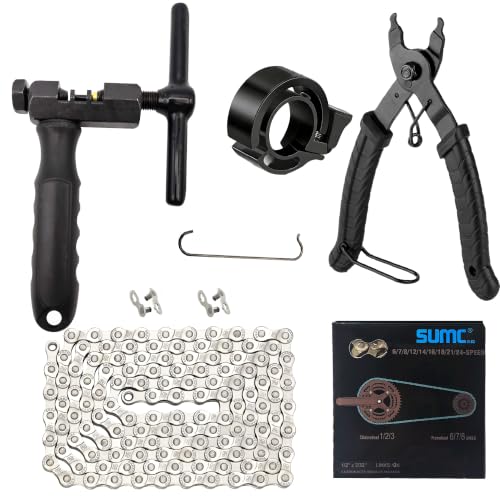
Chain replacement kits often bundle useful installation tools, such as chain breakers and link pliers, which simplify home repairs without requiring a trip to a local shop. Checking whether a chain includes a reusable quick link or requires a dedicated pin will save you valuable workshop time. Proper link counts vary across frame geometries and derailleur cages, meaning you’ll likely need to shorten a new chain before running it through your pulleys. Paying close attention to manufacturer specifications helps you secure smooth shifting performance and solid drivetrain longevity across daily commutes.




Frequently Asked Questions
How do I know whether my bicycle needs a 1/8-inch or 3/32-inch chain?
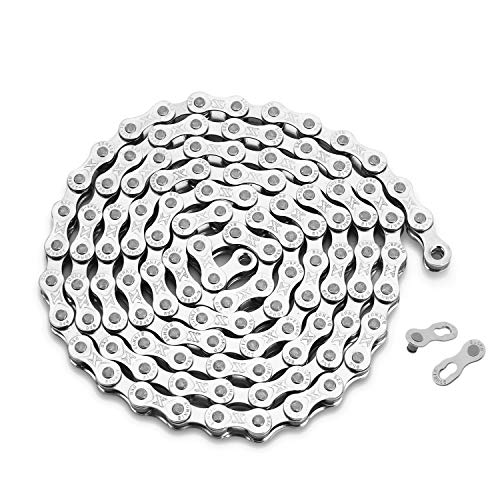
Check your drivetrain cog width and whether your bike uses a derailleur system. Single-speed bicycles, BMX frames, and coaster-brake cruisers typically use wider 1/2-inch by 1/8-inch chains like those from Schwinn and HuGuWdy. In contrast, multi-speed drivetrains with 6, 7, or 8 gears require narrower 3/32-inch chains so the plates can clear adjacent sprockets. Using a 1/8-inch chain on a derailleur system causes severe binding and jamming.
Can a 6, 7, or 8-speed chain be used interchangeably across different brands?
Yes, most 6, 7, and 8-speed chains share similar external widths and internal roller spacing across major drivetrain standards. Listings for models like the SRAM PC-830 confirm compatibility across standard multi-speed sprockets. However, you’ll still need to verify your derailleur capacity and ensure the link count matches your drivetrain requirements before finalizing installation.
How do extra cargo loads and daily commuting affect chain wear?
Carrying additional cargo puts significantly higher mechanical tension on every chain link during acceleration. Riders who commute with heavy gear or run a smart bike basket frequently accelerate under heavier loads, which accelerates internal pin wear. Measuring chain stretch with a dedicated gauge every few hundred miles helps you replace the chain before it damages expensive rear cogs.
Do replacement bicycle chains come sized ready to install?
Most replacement chains arrive with extra links and must be sized to fit your specific bicycle. Models in the product data range from 112 to 116 links, which accommodates various chainstay lengths and cog combinations. You’ll typically need a chain breaker tool to push out extra pins and match the length of your previous chain.
What is the difference between an e-bike chain and a standard bicycle chain?
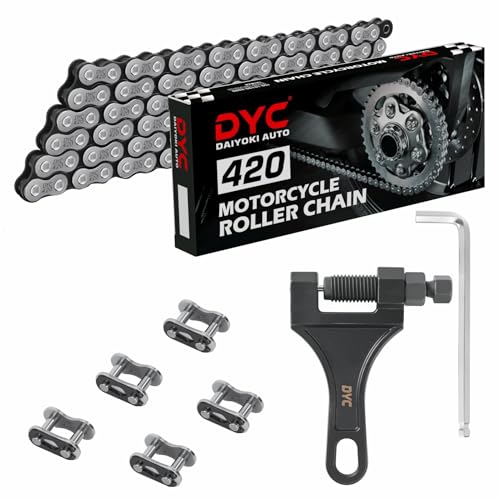
E-bike chains are built with reinforced pins and thicker plates to handle higher motor torque. Product listings such as the XIAOTINGZI e-bike chain specify high tensile strength ratings, reaching up to 2,336 pounds of pull force. While standard chains fit matching speed cassettes, high-assist motors can stretch or snap conventional chains prematurely under steep climbs.



Write Your Review
No reviews yet. Be the first to share your experience!