


Selecting the Right Drivetrain Components
Matching the right chain and crank components to your bicycle prevents unexpected slipping and premature wear across your gears. Many everyday riders struggle to identify whether their frame setup requires a wide eighth-inch single-speed chain or a narrower multi-speed alternative. Searching for the best coswheel chain bike options often brings up specific questions about crankset arm lengths, chainring tooth counts, and derailleur tolerances. Listing details help clarify which hardware pairs with standard square taper bottom brackets. Reviewing these mechanical measurements before buying ensures your bicycle pedals smoothly without chain drops.
Replacement drivetrain hardware ranges from standard links to full crank assemblies designed for city commuting and utility cycling. You can compare different drivetrains by reviewing our notes on drivetrain chain replacements to see how pin connections and link counts affect wheel tension. Single-speed setups rely on robust side plates for chain retention, whereas six, seven, and eight-speed chains need flexible outer plates to shift across rear cogs. Checking whether a replacement includes a master link or requires a dedicated chain tool will save you frustration during installation.





Frequently Asked Questions
How do I know if a 1/2″ x 1/8″ or 1/2″ x 3/32″ chain fits my bicycle?
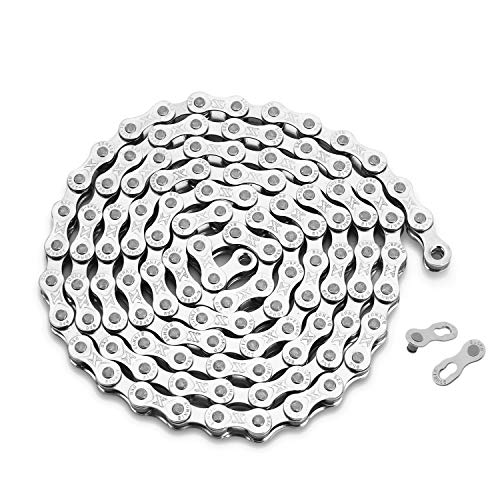
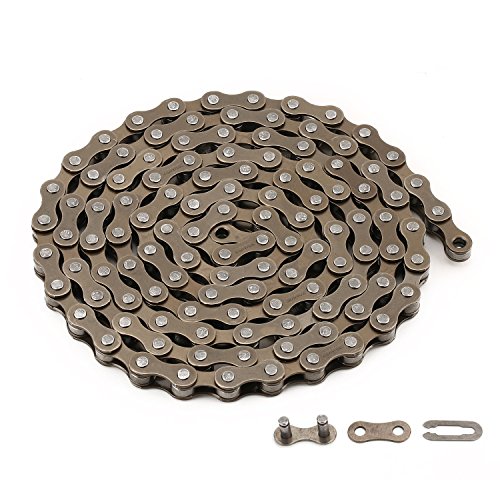
Check your rear cog and front chainring tooth thickness before ordering. A 1/2″ x 1/8″ chain is standard for single-speed, BMX, and cruiser bicycles with thicker sprockets. Multi-speed drivetrains using derailleurs require narrower 1/2″ x 3/32″ chains to clear adjacent gears. Installing a narrow chain on wide single-speed sprockets causes the plates to bind against the teeth.
Can a multi-speed chain work on a single-speed drivetrain?
A multi-speed chain usually will not seat properly on a standard single-speed chainring. The inner spacing of a derailleur-specific chain is too narrow for standard 1/8-inch teeth found on single-speed bicycles. While wide chains can fit loosely on narrow cogs, they can rub against derailleur cages and cause poor alignment. Always match your chain internal width to your chainring specifications.
What tools are needed to install a replacement chain?
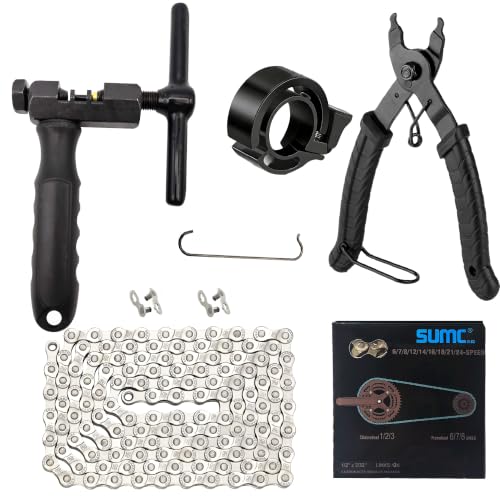
Most chain replacements require a chain breaker tool to size the length by pushing out pins. If your chain kit includes reusable quick links, a pair of link pliers helps snap the connector into place securely. You might also want a chain hook to hold both loose ends together while joining them. Basic single-speed chains with master clips can often be closed with standard needle-nose pliers.
How does chain compatibility differ on high-power electric platforms?
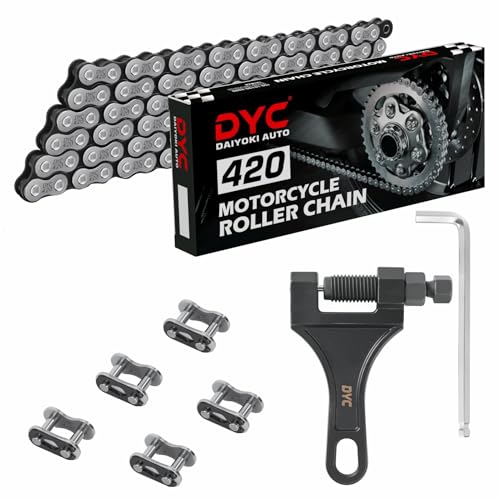
High-torque motorized setups put substantially more stress on drivetrain links than human pedaling alone. Riders exploring an electric dirt bike for adults or powerful e-bikes need reinforced plates and hardened steel pins to handle rapid acceleration. Standard commuter chains wear out faster under heavy motor assistance. Check your manufacturer guidelines to confirm if your setup demands an e-bike rated chain.
What is the difference between a master link and a connecting pin?
A master link or quick link uses two interlocking outer plates that clip together without pressing a permanent rivet. Connecting pins require a chain breaker tool to press a specialized pilot pin directly into the link bushings. Quick links simplify roadside maintenance because you can remove the chain without damaging outer plates. Connecting pins create a permanent link but cannot be reused once pushed out.
How often should you check a bicycle chain for stretch?
Inspect your chain every few hundred miles or whenever you notice shifting hesitation. Using a dedicated chain checker tool tells you if the chain has elongated past 0.5% or 0.75% wear. Replacing a chain early protects your expensive rear cassette and front chainrings from excessive tooth wear. Regular cleaning and dry or wet lubrication also extend the lifespan of your drivetrain components.



Write Your Review
No reviews yet. Be the first to share your experience!