


Matching Drivetrain Chains and Heavy-Duty Setups
Selecting the correct drivetrain components often leaves riders sorting through conflicting chain standards. Standard pedal bicycles rely on 1/2-inch pitch links for derailleur or single-speed systems, whereas motorized projects, mini bikes, or custom e-bikes frequently demand sturdier industrial roller sizes. If you are outfitting a rugged build that combines high-stress rolling gear with reinforced wheels, tracking down the best chain bike for heavy duty innertube 60 setups requires a close look at chain pitch and plate clearance. Many custom frames and specialized chain bike projects require matching sprockets precisely to prevent premature binding. Checking your sprocket width and chain pitch beforehand ensures your drive components work together smoothly.
Chain specifications vary widely between multi-speed derailleur bicycles and heavy-duty motorized drivetrains. Multi-speed chains use narrow 3/32-inch spacing, while heavy roller chains like standard #60 designs feature a 3/4-inch pitch built for high-torque motors. You will also find specialized 60-link loops tailored specifically for light electric off-road platforms. Pairing the right connecting links and ensuring proper chain tension keeps your drive running smoothly without premature wear. Taking a moment to verify your sprocket tooth profile, total link count, and master link style makes all the difference before installing fresh drive hardware.


Frequently Asked Questions
What is the difference between a standard bicycle chain and a #60 roller chain?
Standard bicycle chains use a 1/2-inch pitch, while a #60 roller chain has a 3/4-inch pitch designed for heavier industrial loads. Derailleur chains are much narrower and feature flexible outer plates to shift across cassette cogs. In contrast, #60 chains feature thick side plates and wider rollers that will not fit standard bicycle sprockets or derailleurs.
How do I know if my bike or e-bike requires a 60-link chain?
You should check your vehicle manual or count the individual pins on your existing chain loop. Compact mini bikes and powerful electric dirt bikes for adults often use short direct-drive chain loops around 60 links. Installing a chain with an incorrect link count prevents proper wheel alignment and chain tensioning.
Can I use a master link from a bicycle chain on a #60 heavy-duty chain?
No, connecting links are size-specific and cannot be interchanged across different chain pitches. Bicycle chains use compact quick links sized for 1/2″ x 1/8″ or 1/2″ x 3/32″ dimensions. A #60 chain requires a dedicated #60 master connector link with matching pin diameter and plate thickness.
How do heavy-duty inner tubes interact with chain clearance on custom bike builds?
Thick inner tubes expand tires to their maximum profile, which can reduce physical clearance along the chain line. On custom builds or motorized conversions, a wide roller chain running close to an oversized rear tire may rub if chainline offset is inadequate. Verifying that you have sufficient gap between your chain run and tire prevents sidewall abrasion.
What tools are required to size and install a heavy-duty roller chain?
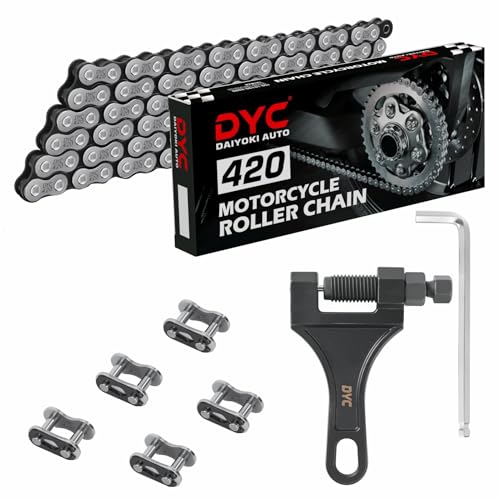
Sizing a heavy-duty roller chain requires an industrial chain breaker tool built for larger pitches. Bicycle chain tools designed for thin multi-speed chains do not have the pin strength or clearance to push pins out of #60 chains. You will also need standard retaining pliers to secure the spring clip on the master link.



Write Your Review
No reviews yet. Be the first to share your experience!