


Motor ratings and battery claims deserve a closer look
A big wattage figure can catch your eye, but it doesn’t tell the whole story. The ZorixBike M9 listed here has a 1500W peak brushless hub motor and 90Nm of torque, not a 3000W motor. Its 48V 20Ah removable battery is advertised for up to 40-50 miles in pure electric mode or up to 70 miles with pedal assist, but those are manufacturer-listed figures, not guaranteed distances. Rider and cargo weight, terrain, wind, temperature, assist choice, and throttle use can all affect range.
This 3000 watt electric bike guide collection is useful for shoppers sorting out a high-power search from the actual specifications of the products listed. It includes one moped-style e-bike and two books about riding and conversion, so it isn’t a lineup of 3000W bicycles. The M9’s extended saddle, high-carbon steel frame, NFC unlock, LCD display, five riding modes, cruise control, and integrated LED light bar may suit commuting or casual rides, but the listing doesn’t provide bike weight, brake type, tire dimensions, or a rider-height range. Check those details before buying, especially if lifting, storage, or fit matters.
For another commuter-focused comparison, see these Kamingo electric bike picks. Riders planning tire replacement can also review this guide to electric bike replacement tires. Those details matter because a tire must match the wheel and bike, while motor power alone doesn’t establish fit, braking performance, or local riding eligibility. Check the seller’s current specifications and follow the manufacturer’s battery and charging instructions before purchase.

Pros
- Punchy 1500W peak brushless hub motor with 90Nm of torque for confident starts and hill climbs
- Substantial 48V 20Ah removable battery providing generous manufacturer-estimated range
- Keyless NFC unlock functionality adds everyday convenience and security
- Durable high-carbon steel chassis supports rider weights up to 330 lbs
Cons
- High-carbon steel frame and fat tire profile create a heavy bike that is difficult to carry up stairs
- Fixed moped-style bench saddle does not offer vertical height adjustments for individual leg extension
- Specific component specs such as tire width, derailleur gearing, and precise top speed are not listed
The ZorixBike M9 is a moped-inspired, fat-tire electric bike designed for adults seeking a relaxed, upright cruiser for city commuting, campus travel, and weekend recreation. Built with a heavy-duty high-carbon steel frame and an extended moto-style bench saddle, it accommodates riders up to 330 lbs who prioritize seating comfort over traditional cycling posture.
Motor performance centers on a brushless rear hub motor delivering 1500W peak output and 90Nm of torque, which the manufacturer states can tackle inclines up to 35 degrees. Fueling this setup is a removable 48V 20Ah battery with an estimated manufacturer range of 40 to 50 miles in pure electric mode and up to 70 miles under pedal assist. Riders can cycle through five operational modes, including pure electric throttle, power assist, push mode, manual pedaling, and a hands-free cruise control function activated directly through the handlebar controls. Real-world range will naturally vary depending on terrain, rider weight, assist levels, and throttle reliance.
Frame construction relies on durable high-carbon steel, providing rigid structural strength paired with disc brakes for controlled stopping. Wide fat tires offer stability across pavement and packed paths, while an integrated horizontal LED light bar throws a wide beam across the road for enhanced low-light visibility. The cockpit features a clear multifunction LCD display that tracks speed, odometer, mode, and battery status, secured by an NFC smart-unlock card that replaces mechanical keys.
Ownership is streamlined with the bike arriving 90% pre-assembled out of the box, requiring basic final assembly supported by instructional videos. The removable battery design allows for flexible indoor charging without needing to haul the entire bike indoors. Ongoing maintenance involves keeping the disc brakes adjusted, checking tire pressures, and following manufacturer battery guidelines, all backed by a 1-year limited warranty.
While the moped-style geometry provides a comfortable, low-stress seating position, the extended bench seat lacks the vertical height adjustment of a standard bicycle seatpost, which may affect pedaling efficiency for riders outside average proportions. In addition, the robust steel frame and large 20Ah battery pack will make the bike heavy to transport or lift into vehicles.
Overall, the ZorixBike M9 represents an appealing option for urban commuters and campus riders who want punchy motor acceleration, long manufacturer-rated battery life, and keyless NFC convenience. Buyers looking for an agile, lightweight road commuter may want to look elsewhere, but those wanting moped aesthetics and relaxed cruising will appreciate the package.
The ZorixBike M9 is powered by a brushless hub motor capable of 1500W peak power and 90Nm of torque, designed to handle steep climbs up to 35 degrees. The bike provides five distinct operating modes to match different riding preferences: pure electric throttle, pedal assist, walk-assist push mode, standard pedal-only mode, and automated cruise control. Cruise control is engaged by pressing and holding the minus button for three to four seconds, and is immediately disengaged when you apply the brakes or twist the throttle again.
A high-capacity 48V 20Ah battery powers the ZorixBike M9, offering a removable form factor so you can charge it on or off the frame. The manufacturer rates the battery for up to 40-50 miles on pure electric throttle and up to 70 miles when using pedal assist, though actual mileage varies based on payload, grade, and assist intensity. Security and usability are enhanced by an NFC smart unlock feature, allowing riders to tap their card on the multifunction LCD console to power up the system without physical keys.
Constructed from high-carbon steel, the ZorixBike M9 features a motorcycle-inspired chassis engineered to hold riders up to 330 lbs. Instead of a traditional bike saddle, it incorporates an extended, thick-cushioned bench seat intended to reduce riding fatigue over longer distances. Up front, a wide-beam integrated LED light bar ensures broad illumination during dawn, dusk, and night riding, adding both visibility and modern style.
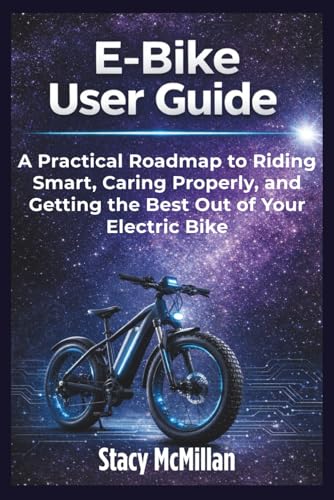
Pros
- Practical topic focus covering electric bike setup, maintenance habits, and smart riding strategies
- Compact 6 x 0.4 x 9-inch physical footprint is easy to handle, store, or keep in a workshop area
- Lightweight 0.54-pound paperback binding makes it portable for reading on the go
- Useful entry-level guide for riders transitioning from traditional bicycles to motorized pedal-assist bikes
Cons
- General handbook format cannot replace model-specific factory manuals or exact component schematics
- Paperback printed format lacks digital search capabilities or interactive video tutorials
- Listing details do not provide a detailed chapter outline or index preview
The E-Bike User Guide: A Practical Roadmap to Riding Smart, Caring Properly, and Getting the Best Out of Your Electric Bike is an instructional paperback reference designed for commuters, recreational cyclists, and first-time electric bike owners. Transitioning from a standard bicycle to an e-bike introduces motorized assist systems, battery management considerations, and higher average riding speeds. This publication is designed to help riders navigate those changes smoothly, providing foundational guidance from initial unboxing and setup through long-term ownership.
As indicated by its subtitle, the guide focuses on three core pillars: riding smart, caring properly, and maximizing e-bike performance. For daily commuters and urban riders, understanding how motor assist levels, pedaling cadence, and battery charging habits interact can prevent premature component wear. A structured handbook helps demystify basic operational practices so riders can approach their daily commutes or weekend outings with greater confidence.
The physical book is produced in a portable paperback binding measuring 6 inches wide, 0.4 inches thick, and 9 inches tall. Weighing roughly 0.54 pounds, it is lightweight enough to carry in a messenger bag or store in a garage workbench drawer. Having a physical reference book makes it easy to review maintenance advice or pre-ride checklists without needing to look at a smartphone screen while working near the bike.
Ownership and routine maintenance are central to getting good long-term value out of an electric bicycle. While brand-specific factory manuals typically focus on warranty terms and basic mechanical assembly, general user guides offer broader context regarding riding etiquette, cleaning precautions, and basic system checks. It serves as a handy reference during the initial weeks of ownership while new habits around charging and storage are being formed.
There are natural limitations to any general bicycle publication. This guide cannot replace the exact torque values, component specifications, or wiring diagrams provided by individual e-bike manufacturers. System configurations differ significantly across hub-drive motors, mid-drive setups, proprietary battery mounts, and varied display units. Riders must also remember that local legal classifications and trail access rules vary by jurisdiction and require local verification.
For riders looking for an approachable, non-digital overview of e-bike operation and regular care, the E-Bike User Guide is a practical supplementary tool. It provides an organized ownership roadmap in a lightweight, durable format, making it well suited for new e-bike owners seeking to protect their investment and ride more intelligently.
General e-bike handbooks provide a baseline understanding of ongoing maintenance schedules, battery storage guidelines, and safe operational habits. Routine attention to tire pressure, brake pad condition, chain lubrication, and clean electrical contact points helps keep an electric bicycle operating efficiently.
While this guide offers helpful universal principles, riders should always cross-reference recommendations with their specific bike manufacturer documentation for exact torque ratings, authorized replacement components, and warranty requirements.

Pros
- Focused instruction tailored to budget-conscious riders planning a DIY electric bike conversion
- Compact 6 x 9-inch paperback format fits easily on workbenches, tool carts, or bookshelves
- Lightweight 0.62-pound build allows easy handling during hands-on assembly sessions
- Helps builders evaluate motor and battery options before committing to costly component purchases
Cons
- Printed format cannot provide real-time firmware updates or interactive video demonstrations
- Contains instructional material only and does not include physical tools, motors, or wiring hardware
- Cannot replace model-specific wiring schematics supplied by individual conversion kit manufacturers
The Ultimate DIY Guide to Electric Bike Conversion by Majosta is a dedicated paperback reference manual designed for cyclists interested in electrifying a traditional bicycle. It is particularly well-suited for budget-minded commuters, home mechanics, and everyday riders who want to understand the conversion process before investing in motors, batteries, and controllers. Instead of purchasing an expensive pre-assembled e-bike, readers can use this guide to explore the fundamental principles of retrofitting a standard frame.
Building a custom electric bike requires careful planning regarding motor configuration, battery chemistry, wiring routes, and throttle or pedal-assist sensor placement. This book focuses on the DIY conversion pathway, providing foundational concepts that help readers select appropriate components for their specific commuting or recreational goals. Whether someone intends to build a lightweight city commuter or a sturdy utility cruiser, having a dedicated physical guide helps outline component relationships before beginning assembly.
In terms of physical format, the guide is published as a paperback measuring 6 inches wide by 9 inches tall, with a slim 0.34-inch profile. Weighing only 0.62 pounds, the book is lightweight enough to lay flat on a garage workbench, slide into a tool chest drawer, or toss into a commuter bag. The tangible paper format is especially handy when working with greasy tools, where touching a phone screen, laptop, or tablet might be inconvenient or messy.
Using a dedicated conversion manual simplifies the preparation phase of an electric bike project. Cyclists can cross-check frame spacing, bottom bracket compatibility, and brake clearances against standard conversion requirements before purchasing a kit. An organized handbook provides a structured roadmap, helping builders organize their workspace, gather the necessary hand tools, and approach wiring systematically.
Because this is a generalized instructional book, it cannot cover the proprietary wiring diagrams or specific firmware settings of every individual conversion kit on the market. Builders must still follow the manufacturer instructions that accompany their chosen motor kits, throttles, displays, and battery packs. Additionally, printed guides do not provide the dynamic video walk-throughs that some visual learners may prefer for intricate mechanical adjustments.
For cyclists, apartment residents, and hobbyists looking to avoid the high price tag of factory e-bikes, The Ultimate DIY Guide to Electric Bike Conversion offers a sensible starting point. It equips home mechanics with the conceptual baseline needed to choose the right parts, plan a safe build, and understand how electric drive systems integrate with everyday bikes.
A printed guide provides a reliable reference point when working in spaces where digital devices may be cumbersome or prone to damage. Measuring 6 by 9 inches and weighing just 0.62 pounds, this paperback fits comfortably alongside standard bike tools on any workbench.
Using a physical reference manual allows home mechanics to plan out battery mounting positions, motor wiring pathways, and cable management without getting grease or dirt on smartphones and computer keyboards.
FAQs
Is the ZorixBike M9 a 3000W electric bike?
No. The listed specification is a 1500W peak brushless hub motor with 90Nm of torque, not a 3000W motor. Peak power and torque describe different things, and the supplied details don’t state nominal motor wattage or a top speed. Confirm the exact motor rating and local requirements before purchase.
What battery and range does the M9 list?
The M9 lists a removable 48V 20Ah battery and claims up to 40-50 miles in pure electric mode or up to 70 miles with pedal assist. Voltage and amp-hours are separate battery specifications; multiplying them gives a nominal energy estimate, not a guaranteed usable capacity. Actual distance varies with riding conditions and assist or throttle use.
Does the M9 support pedal assist and throttle riding?
The product description lists pure electric, power assist, push, automatic cruise, and pedal modes. It does not specify a cadence or torque sensor, nor does it clearly describe the throttle’s exact behavior. Check the current product details and owner instructions for control operation before relying on a particular assist response.
Can I use any 48V charger with the M9 battery?
No. A matching 48V label alone does not establish charger compatibility. Verify the required charger specifications, connector, and instructions with ZorixBike, and don’t substitute a charger based only on appearance or voltage.
Does 1500W peak power establish the M9’s legal e-bike class?
No. The supplied product information does not state an e-bike class or assisted-speed limit, and peak motor power alone doesn’t establish either. Rules can vary by state, locality, trail system, and facility, so verify the model’s details and the rules where you plan to ride.
Are the two books substitutes for buying an electric bike?
No. The E-Bike User Guide and The Ultimate DIY Guide to Electric Bike Conversion are books, not bicycles or conversion hardware. Their listings provide no feature details here, so review the book descriptions to confirm their scope before buying; a conversion also requires checking component and frame compatibility.


Write Your Review
No reviews yet. Be the first to share your experience!