

Motor power, riding conditions, and the bike’s intended use all shape how quickly an electric bike can travel. If you’re asking how fast will a electric bike go, start with the speed stated for the specific model, then check what that number means and whether it suits your riding plans. A marketed top speed is not automatically a legal classification, and it does not tell you how long the battery will last at that pace. Those distinctions matter for off-road electric dirt bikes as much as for everyday e-bikes.
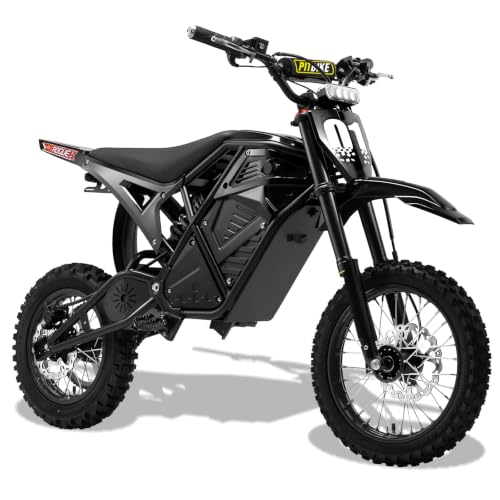
The YJOVELA Electric Dirt Bike for Teens Adults is listed with a maximum speed of 38 mph, a 3600W peak mid-drive motor, and three speed modes. Those are product-description claims, not independent test results, so treat them as manufacturer-provided specifications and confirm current details before buying. Its off-road positioning also means it should not be assumed suitable for public-road use. For broader electric-bike context, see our trail-focused electric bike guide and our commuter e-bike overview.
How Electric Bike Speed Works in Practice
An electric bike’s speed depends on its design and operating conditions, so there is no single speed that applies to every model. For the YJOVELA Electric Dirt Bike for Teens Adults, the product listing states a top speed of 38 mph and three speed modes. That figure describes the manufacturer’s stated maximum, not a guaranteed speed for every rider or terrain. The listing alone also does not establish a legal e-bike class or permission to ride on public roads, bike paths, or trails.
What the listed 38 mph figure does and does not tell you
A stated top speed gives a shopper a useful point of reference, but it is not the same as an independently verified result. The product information does not provide test conditions, rider weight, terrain, battery state, or a method for measuring that figure. Those missing details make it inappropriate to promise that a buyer will reach 38 mph in ordinary use. Treat the number as a manufacturer-listed specification and check the seller’s current product information for clarifications.
Speed on a particular ride may be affected by the rider, surface, incline, wind, tire condition, battery condition, and chosen mode. A dirt route with loose ground can call for a different pace than a smooth, open stretch, and the same bike may not behave identically in both settings. The product listing does not quantify how much any one condition changes speed. Buyers should therefore use the listed maximum as a reference, not as a prediction for every ride.
The number also does not identify how the bike is legally categorized. A marketed speed and a motor’s peak wattage are not enough to infer a U.S. e-bike class, road legality, or trail access. Rules may differ by state, locality, trail system, and land manager, and a bike marketed as an off-road dirt bike may be subject to different requirements from a conventional commuter e-bike. Check the applicable rules where you intend to ride before purchasing or using the bike.
Peak motor power is not the same as speed
The YJOVELA product title and listing identify a 3600W peak mid-drive motor and state 220 Nm of torque. Peak motor power and torque describe different aspects of the motor, and neither figure independently establishes a particular top speed. The listing also does not state a nominal or continuous motor rating, so the 3600W peak figure should not be presented as a continuous rating. Buyers comparing motor specifications should keep those labels distinct.
Motor power alone cannot predict how quickly a bike will accelerate, how it will handle a hill, or how far it will travel on a charge. Those outcomes depend on the complete bike and conditions, while the supplied product information does not include performance measurements for them. Torque is also not a speed figure. It is more useful to compare each specification with the manufacturer’s description and intended use than to treat larger numbers as automatic proof of a better match.
The listing describes this model as a dirt bike with three speed modes, but it does not provide the speed limit for each mode or explain whether the modes can be individually limited. That means a buyer cannot calculate a specific speed for each setting from the supplied information. Ask the seller for current operating details if mode limits are important to your decision. Do not assume that a mode name or motor rating establishes safe or legal use for a particular rider or location.
How to Interpret the YJOVELA Speed and Mode Claims
The YJOVELA Electric Dirt Bike for Teens Adults is a specific example, not a stand-in for every electric bike. Its listing combines a 38 mph claimed maximum, three speed modes, a 3600W peak mid-drive motor, and a 48V 23Ah battery. Each detail describes a different part of the product, and none should be stretched into a promise about real-world speed, range, or legal classification. Reviewing them separately helps keep the buying decision grounded.
Three speed modes need more detail to compare
Three modes may offer a way to select among different riding settings, and the product description says the modes are limitable. However, the supplied information does not identify the speed ceiling for each mode, the exact controls, or the procedure for changing settings. It also does not describe the bike’s throttle or pedal-assist behavior. A buyer who needs those details should confirm them with the seller or manufacturer before relying on a particular mode for a specific situation.
Mode count by itself is not a measure of how smoothly power is delivered or how quickly the bike responds. The product information does not identify a cadence sensor, torque sensor, assist levels, or a specific control interface, so those features should not be assumed. If predictable speed selection is important, ask what each mode changes and whether the bike’s controls display current speed or mode. Clear answers are more useful than inferring behavior from the number of modes alone.
The listing says the modes can help riders manage speed, but that is a manufacturer claim rather than a substitute for supervision, protective equipment, or local rules. The product information specifically says teens should ride under adult supervision and follow applicable safety regulations. It also advises buyers to check local legal age or license requirements. These points deserve attention before purchase, especially because the product is marketed for teens and adults.
Battery capacity and the stated range are separate from top speed
The YJOVELA listing identifies a 48V 23Ah battery and states a maximum range of 53 miles. Voltage and amp-hours are separate battery specifications; the product data does not provide watt-hours, so that figure should not be invented or implied. The 53-mile statement is manufacturer-listed, not a guarantee of the distance every rider will cover. It also does not say that the bike will travel that distance while continuously operating at its listed maximum speed.
Actual distance can vary with factors such as rider and cargo weight, terrain, gradients, wind, temperature, speed, riding style, and battery condition. The product information does not specify the conditions used to produce its range claim. A shopper planning longer outings should ask the seller how the stated figure was determined and consider a margin for changing conditions. The battery’s removable design is listed as a feature, but the supplied data does not state charging time or charger specifications.
A listed range and a listed maximum speed answer different questions: one concerns claimed distance, and the other concerns claimed maximum speed. Neither number guarantees the other. Sustained faster riding may affect energy use, but the supplied product data does not quantify that relationship for this model. Avoid planning a route on the assumption that maximum speed and maximum listed range will occur together.
For battery charging and storage, follow the product’s supplied instructions and use only a charger confirmed by the manufacturer for that battery system. A matching connector or nominal voltage alone does not prove charger compatibility. The listing describes a smart battery management system and a removable battery, but those details do not justify opening the pack or modifying its electrical connections. Contact the seller or manufacturer if replacement or charging compatibility is unclear.
Speed, Terrain, and the Off-Road Use Case
The YJOVELA is described as an off-road electric dirt bike, so its claimed speed should be considered alongside that stated use. The listing names 14-inch front and 12-inch rear tires, dual suspension, and dual hydraulic brakes. These are specifications, not proof of a particular level of handling, stopping distance, or terrain capability. A buyer should judge whether the stated configuration fits the intended riding environment without treating any single feature as a guarantee.
Terrain changes the practical meaning of a speed figure. Uneven surfaces, loose ground, slopes, and obstacles may call for a more cautious pace, while the product description does not provide a recommended speed for each type of terrain. Its stated ability to handle a 35-degree incline is a manufacturer claim, not an independent assessment or advice to ride steep slopes. Do not use a listed incline figure as a reason to attempt terrain beyond the rider’s skill, the bike’s instructions, or local restrictions.
The listing names dual hydraulic brakes and an instant cutoff, but it does not provide stopping-distance measurements or describe the conditions under which braking performance was assessed. Braking ability can depend on factors beyond the brake type, including setup, surface, speed, and maintenance. A buyer should confirm that the bike is assembled and adjusted according to its instructions before riding. If a brake or wheel appears incorrectly installed or does not operate as described, do not ride until the issue has been addressed by a qualified service provider or the manufacturer.
Suspension and tire sizes also do not establish universal suitability for every trail. The product description says the bike has dual hydraulic nitrogen shock absorbers, but it does not provide adjustment ranges, rider-fit measurements, or a supported terrain list. Buyers should verify fit and intended use rather than assuming that a dirt-bike label covers every off-road environment. Protective equipment and careful attention to the manufacturer’s instructions remain important regardless of the claimed maximum speed.
Riders comparing other trail-oriented options can use our trail electric bike overview as a related reference, while keeping each model’s specifications separate. Similar marketing categories do not prove that two bikes share motor output, battery capacity, top speed, controls, or legal status. Compare the exact model information, not just the broad label. If a listing omits a specification that matters to your use, seek clarification instead of filling the gap with assumptions.
Road Rules, Rider Suitability, and Purchase Checks
A product’s advertised speed does not determine where it can be ridden. The YJOVELA listing calls the product an electric dirt bike and advises checking local age or license requirements, but it does not state a U.S. e-bike class or universal road approval. Local rules and access restrictions can vary, so confirm requirements with the relevant local authority, trail manager, or property owner. This is a practical purchase check, not a conclusion that any specific location allows or prohibits the bike.
Age and supervision deserve particular attention because the product is marketed for teens and adults. The supplied description says teens should operate it only under adult supervision and follow local safety regulations. It does not provide a rider-height range, minimum age, or a universal license rule. Parents and buyers should verify current requirements and the manufacturer’s rider guidance before deciding whether the bike is appropriate for a particular person.
Before buying, confirm which speed figure the seller is currently advertising, what the three modes do, and whether any mode limits are documented. Ask whether the listed 38 mph is a stated maximum under defined conditions, since the supplied product information does not explain a test method. Check the current assembly instructions and warranty terms as well. The listing says setup is required and warns buyers to retain the original packaging for returns or exchanges, so those ownership details may affect delivery planning.
Confirm that the exact bike configuration, battery, charger, and replacement support match the seller’s current information. The product listing describes a removable 48V 23Ah battery, a smart battery management system, and a one-year warranty, but does not state charging time or all replacement-part specifications. Its mention of a certification applies to the battery as described in the listing; do not expand that into a claim that the complete bike has a particular certification. Ask for documentation if certification scope or service coverage affects your decision.
What to do if the actual speed differs from the listing
A difference between a listed maximum and a rider’s observed speed does not by itself identify a fault. Conditions, selected mode, battery state, setup, and the way speed is measured can all affect the comparison, while the product data does not specify a required measurement procedure. First consult the owner’s instructions and confirm the intended operating mode. Avoid changing wiring, bypassing controls, or attempting to remove a speed restriction.
If the bike behaves unexpectedly, note the selected mode and the conditions without attempting unsafe high-speed checks. Review the manufacturer’s guidance and contact the seller or manufacturer with the model details and a clear description of the issue. For assembly, brake, battery, or electrical concerns, do not ride until the concern has been assessed and addressed according to the supplied instructions. A qualified service provider may be appropriate when the issue involves systems the owner is not equipped to inspect safely.
Buyers should also distinguish a low speed from a low range or a charging concern. A speed question may relate to mode settings or the model’s listed maximum, while a range concern involves battery energy and riding conditions. The supplied information does not provide diagnostic thresholds for either issue. Keeping the symptom specific helps the seller give a more useful answer and prevents unnecessary or unsafe modifications.
Making Sense of an Electric Bike Speed Claim
For the YJOVELA Electric Dirt Bike for Teens Adults, the clear answer is that its product listing states a maximum speed of 38 mph, but that number should be treated as a manufacturer claim rather than a guaranteed result. The listing also identifies three modes, a 3600W peak mid-drive motor, 220 Nm of torque, and a 48V 23Ah battery, but those specifications do not independently establish legal class, real-world speed, or range at top speed. Its off-road marketing and teen-supervision warning make intended use and local requirements central to the decision. Verify mode details, rider suitability, current instructions, and local access before relying on the advertised figure.



Write Your Review
No reviews yet. Be the first to share your experience!