

A first bike can be frustrating if its design doesn’t match a child’s current skills or the places they’ll ride. The question of why balance bikes are bad usually has a more nuanced answer: a balance bike can be a poor match in some situations, but it isn’t automatically a poor choice for every beginner. A child who wants to pedal, needs a different type of bike, or can’t comfortably manage a particular model may do better with another option.
Start with the child’s measurements, comfort, and riding goals rather than an age label or a broad claim that one bike type is best. A balance bike has no pedals, so the rider pushes along with their feet and practices steering and balance; a pedal bike with training wheels offers a different learning experience. For more general context, see this overview of kids’ bike options and our guide to a children’s bike model. The information below separates those general tradeoffs from the specifications listed for the products in this article.
Top Products

Why Balance Bikes Can Be a Poor Match
A balance bike isn’t inherently bad. It can be an unsuitable choice when its size, design, or intended use doesn’t fit the child or the riding situation. It may also be the wrong tool for a child who is ready to practice pedaling, or for a caregiver looking for a bicycle with pedals and a particular braking setup.
The phrase “bad” can obscure the actual decision. Instead of judging the whole category, identify what is not working: the child may not be able to stand over the frame comfortably, may not want to push along, or may be riding on surfaces that don’t suit the particular bike. A different bike type may address that concern, but it should still fit and be manageable for the child.
What a balance bike teaches, and what it doesn’t
A balance bike lets a child propel the bike with their feet rather than turn pedals. The child can work on steering and balance while moving at a pace they help control, then lift their feet when ready. That design does not provide pedal practice, and a balance bike’s components and instructions vary by model.
For a child whose immediate goal is pedaling, a balance bike alone won’t provide that practice. A pedal bike offers another learning path, and training wheels are one possible configuration on some bikes. These options are not interchangeable in every detail: the child still needs to become familiar with the controls and the particular bicycle, and no bike type guarantees a quick or effortless transition.
It’s also possible that the bike isn’t the main issue. A child may need more time, a calmer place to practice, or an adult to check that the bike is assembled and adjusted according to its instructions. If riding feels upsetting or physically awkward, pause and reassess rather than treating persistence as the only solution. The child’s comfort and ability to control the bike matter more than following a fixed timeline.
Where fit and riding conditions change the decision
A bike that is too large or awkward to handle can make learning difficult, regardless of whether it has pedals. Age guidance on a product page can be a starting point, but age alone does not confirm fit. Compare the child’s relevant measurements with the manufacturer’s current sizing information, then consider whether the child can manage the bike as intended.
Riding conditions matter too. A family choosing for a smooth, open practice area may have different needs from one looking at uneven paths or another setting. Check the bike maker’s instructions for the model and intended use rather than assuming that a tire or frame description establishes suitability for every surface. Do not rely on an unfamiliar or unsuitable bike to compensate for a riding environment that is difficult to manage.
Some children may prefer a pedal bike or simply be more interested in one. That preference is relevant, but it doesn’t replace checking fit, controls, assembly, and the bike’s instructions. Conversely, a child who enjoys pushing and gliding may find a balance bike engaging if the model is an appropriate size and the intended riding conditions suit it. There is no need to turn either preference into a universal rule.
Choosing an Alternative Without Guessing at Fit
Use measurements alongside manufacturer guidance
Before choosing another bike, note the child’s measurements that the manufacturer asks families to use. Compare those measurements with the current sizing guidance for the exact model, rather than relying only on a general age range. Bike size labels and age ranges do not describe every aspect of fit, and sizing conventions may vary between designs and brands.
Consider whether the child can get on and off in a controlled way and reach the handlebars and any controls provided. The rider should be able to manage the bike’s intended movement without an adult stretching the maker’s stated limits or changing the setup in a way the instructions do not allow. If the product’s guidance doesn’t explain a measurement or adjustment clearly, ask the manufacturer or a qualified local bike professional rather than guessing.
Buying larger to allow for growth can be tempting, but a future size is not automatically easier to handle now. A bike that feels difficult to steer, mount, or stop may not suit the child’s present ability. Compare the actual fit and reach with the manufacturer’s information; do not assume that a child will quickly grow into an awkward setup.
Choose the bike type for the skill being practiced
Think about what the child is learning now. A balance bike focuses on pushing, steering, and balancing without pedals; a pedal bike introduces pedaling as well as steering and stopping. A bike with training wheels offers a different configuration, but the supplied product data here does not establish that those wheels suit every bicycle or child.
Training wheels must be intended for the particular bike and fitted according to their instructions. Don’t assume that a product described for one type of children’s bike can be mounted to another. Check model compatibility, mounting points, clearances, and the instructions from the bicycle and component makers before purchase or installation. If those sources don’t confirm compatibility, seek clarification rather than modifying the bicycle.
The FRP product listed here is described as dirt bike training wheels for specified 49cc and 50cc kids’ bikes, with particular listed compatibility and mounting details. Those claims concern the stated powered-bike models, not ordinary pedal bikes, and they should not be taken as evidence that the product fits an unlisted bicycle. Its product information also lists included protective gear and hardware, but inclusion alone does not establish fit, condition, or suitability for a rider.
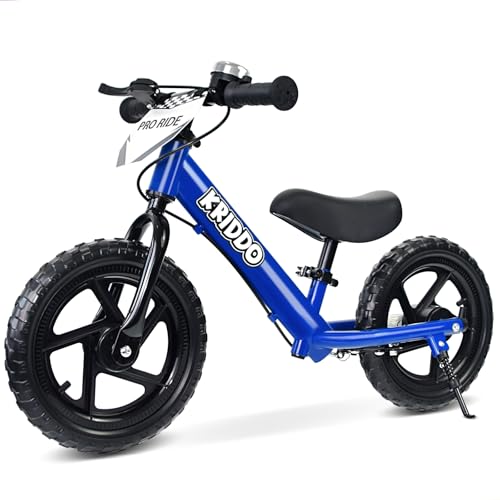
The KRIDDO listing describes a toddler balance bike for ages 24 months to 5 years and lists a Mini-V brake, kickstand, customizable plate, and all-terrain tires. Those are product-description details, not proof that it fits a particular child or is suitable for every riding surface. Check current manufacturer information and the child’s measurements before drawing a fit conclusion. Its listed brake also means a caregiver should make sure the child understands the controls and that the bike is assembled and maintained as instructed.
Learning and Safety Depend on More Than Bike Type
Make practice manageable and supervised
Choose a practice place and activity that match the child’s ability and the bicycle maker’s guidance. Keep early practice simple, with a caregiver close enough to supervise, and avoid traffic or other hazards. Do not pressure a child to move to a faster or more complex skill before they are ready to manage the bike’s controls.
Protective equipment should be appropriate, correctly fitted, and used according to its instructions. Helmet laws and other riding rules vary by location, so check current local requirements; legal rules are separate from general safety recommendations. The product listings in this article do not provide a substitute for current guidance from relevant public safety authorities or for the instructions supplied with the equipment.
Before riding, a caregiver can check that the bicycle is assembled as directed and that its controls and parts appear to be in proper working condition. If a brake doesn’t operate as expected, a wheel or component is loose, or the assembly instructions are unclear, don’t improvise a fix and send the child out to ride. Consult the maker’s instructions or a qualified bicycle service provider for help with a concern that affects operation.
Reassess when the child struggles
If a child avoids the bike or seems uncomfortable, look at more than motivation. Recheck whether the bike is the type they want to learn on, whether its size follows the maker’s guidance, and whether the handlebars and controls can be managed. The riding environment and the condition of the bicycle can also affect how manageable the session feels.
Make one reasonable change at a time, such as pausing, selecting a more appropriate practice setting, or getting help with fit or assembly. That makes it easier to understand what may be contributing to the difficulty. Avoid forcing a child to ride an unsuitable setup or making adjustments that conflict with the bicycle’s instructions.
Care, Assembly, and Secondhand Checks
Any children’s bike needs attention to its condition, whether it is a balance bike or a pedal model. Follow the manufacturer’s assembly, adjustment, cleaning, and maintenance instructions for that specific bicycle. Keep the instructions and product information available so a caregiver can check which parts and adjustments apply to the model.
Routine checks should follow the maker’s guidance and account for how the bicycle is used and stored. Look for visible damage or loose parts, and check tires and brakes where the bike has them, using the instructions for the model. A balance bike may not have the same controls or components as a pedal bike, so don’t apply a checklist for one design without checking what the other actually includes.
Assembly needs can affect whether a bike is convenient for a household, but a product description does not replace the actual assembly instructions. The FRP listing says its training wheel set includes specific bolts and wrenches and refers to an installation video on the product page. That information applies to the listed set; it does not confirm a fit on an unlisted bicycle or remove the need to follow the bicycle and component instructions.
A used bike deserves a careful check before a child rides it. Confirm the model and what is included, look for visible damage or missing parts, and ask whether the bike’s instructions and any model-specific information are available. Check that parts match the bicycle and that any previous adjustments or modifications are understood. If damage or assembly concerns affect steering, stopping, or structural parts, have the bicycle assessed by a qualified service provider before use.
For related decisions about size and riding needs, this children’s bike overview provides another model-specific reference point. Product pages can help identify listed features, but they don’t establish that a bike fits a particular child, that a component will fit an unlisted model, or that a used bicycle is in good condition. Confirm those questions with current manufacturer information and an inspection of the actual bike.
Deciding Whether the Balance Bike Is the Problem
Balance bikes can be a poor match when the child needs pedal practice, dislikes moving by pushing, cannot manage the fit, or needs a different bicycle for the intended use. Those limitations are reasons to reassess the specific bike and situation, not evidence that every balance bike is bad. A pedal bike or another configuration may make more sense if it better matches the child’s current skills and can be fitted and used as directed.
Make the decision by checking the child’s measurements against current manufacturer guidance, considering the skill they want to practice, and confirming that the bike’s setup and condition are appropriate. Don’t choose a larger bike solely for future growth or assume a product’s age label proves fit. If those checks leave uncertainty, pause the decision and get model-specific advice from the manufacturer or a qualified bicycle professional.






Write Your Review
No reviews yet. Be the first to share your experience!