


Motor output, battery capacity, fit, and intended terrain can make two electric bikes feel like very different purchases on paper. If you’re working out how to select electric bike options, start by matching the bike’s stated features to the rides you actually expect to take, rather than treating a large peak-watt figure or advertised range as a complete answer. The available products here include complete bikes with different wheel sizes, battery details, brakes, and suspension, as well as a conversion kit that is a different kind of purchase altogether.
Manufacturer-listed numbers are useful for narrowing choices, but they don’t establish real-world range, legal classification, rider fit, or compatibility with accessories. One product, for example, lists a 20-inch fat-tire setup and a removable battery, while another lists 26-inch wheels and full suspension. Those distinctions may matter for storage, terrain, and handling, but they don’t replace checking the product details and local requirements. For more model context, see our Kamingo electric bike guide and Vivi e-bike options.

Pros
- Complete electrical system is certified to ANSI/CAN/UL 2849:2022A by TÜV Rheinland for verified electrical safety.
- Substantial 400-pound maximum load limit accommodates taller, heavier riders or utility cargo setups.
- Generous 48V 16.8Ah battery capacity provides a manufacturer-listed eco range of up to 60 miles.
- 20x4-inch puncture-resistant tires offer added stability across loose gravel, rough asphalt, and dirt trails.
Cons
- Manufacturer documentation lists conflicting top assisted speeds of 30 mph and 35 mph, requiring riders to independently verify local e-bike class and trail regulations.
- Recharge time of 6 to 8 hours requires advance planning for daily round-trip commuters.
- The 67-inch long frame and wide 4-inch tires create a substantial footprint that may challenge narrow indoor storage or stair navigation.
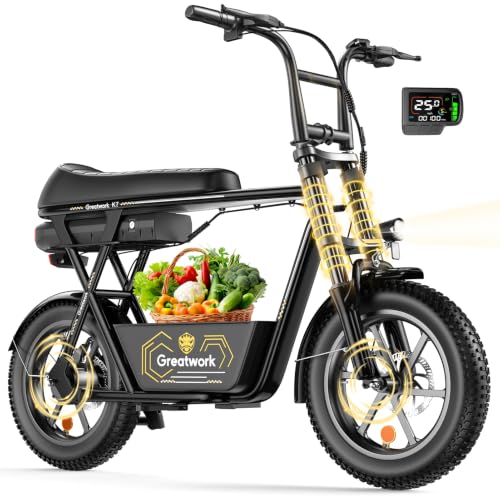
The ZOILSHUNDRY all-terrain electric bike is a compact, fat-tire utility model engineered for adult commuters, utility riders, and recreational cyclists seeking strong propulsion and generous weight capacity. With a frame rated to hold up to 400 pounds, it directly accommodates heavier riders or commuters hauling backpacks and daily gear. Its low-slung stance on 20-inch wheels keeps the center of gravity manageable, making it well suited for neighborhood errands, weekend trails, or daily urban commutes across poorly maintained pavement.
Propulsion comes from a brushless motor capable of 1500W peak output and 90Nm of maximum torque, which provides solid low-speed thrust for starting on grades or carrying substantial payloads. Power is supplied by a removable 48V 16.8Ah battery pack, which the manufacturer states can achieve up to 60 miles of range in Eco pedal-assist mode. As with all electric bicycles, achievable distance will vary based on rider weight, terrain steepness, tire pressure, wind resistance, and whether the rider relies heavily on the throttle rather than human pedaling. Speed documentation lists capabilities between 30 and 35 mph, placing this bike outside standard low-speed commuter thresholds depending on operating mode.
Hardware specifications emphasize safety, highlighted by complete electrical system certification from TÜV Rheinland under ANSI/CAN/UL 2849:2022A. This certification covers the unified combination of battery, motor, controller, and charger, providing a documented safety baseline that apartment managers and safety-conscious buyers frequently prioritize. Traction and comfort are handled by 20x4-inch puncture-resistant fat tires that absorb road shock better than narrow commuter rubber. Stopping power is managed by dual disc brakes, while lighting includes a high-luminosity headlight, an integrated rear brake light, and dual wheel reflectors for after-dark visibility.
Ownership and daily operation are straightforward thanks to the removable battery design, which can be detached with a key and recharged in 6 to 8 hours using standard household wall outlets. The 7-speed mechanical drivetrain gives riders gearing options to match pedal cadence against motor assist levels or pedal independently should the battery run low. Routine upkeep mirrors standard bicycle maintenance: riders will periodically inspect cable tension on the dual disc brakes, maintain optimal tire pressure across the 4-inch casings, and keep the chain clean and lubricated.
Buyers should account for a few practical constraints before purchasing. Marketing specifications reference top speeds of both 30 mph and up to 35 mph, which exceeds typical 20 mph Class 2 or 28 mph Class 3 classifications in many jurisdictions. Riders must review state and municipal rules regarding helmet use, age minimums, and whether high-speed e-bikes are restricted from local multi-use paths. Additionally, while the 20-inch wheels create an agile ride height, the overall dimensions of 67 inches long and 27.5 inches wide, combined with heavy-duty tubing, mean carrying this bike up multiple flights of stairs will demand physical effort.
For adult riders needing a high-torque, heavy-payload runabout for city streets, gravel roads, and neighborhood utility trips, this model delivers substantial physical capability. The inclusion of a verified UL 2849 electrical system certification, robust 400-pound load capacity, and 48V 16.8Ah power reserve makes it a practical option for value-conscious riders who want strong off-the-line assistance and all-terrain tire volume.
The ZOILSHUNDRY e-bike features a high-speed brushless motor rated for a peak output of 1500W and 90Nm of maximum torque. This torque rating helps the bike overcome static friction when starting under load and supports manufacturer-claimed hill climbing on grades up to 30 degrees. The motor output is complemented by a 7-speed mechanical gear system that lets riders match their human pedaling effort to motor-assisted speeds.
Speed documentation from the manufacturer notes a top speed of 30 mph in some passages and up to 35 mph in others. Because U.S. e-bike classifications commonly define Class 1 and Class 2 bikes at 20 mph and Class 3 at 28 mph, operating at or above 30 mph may restrict this bicycle from certain public bike paths, multi-use trails, and pedestrian zones. Buyers should verify their specific municipal and state laws regarding high-speed electric bicycle usage, helmet requirements, and allowable operating areas.
Energy is stored in a removable 48V 16.8Ah battery pack designed to recharge within 6 to 8 hours. The removable architecture allows riders to leave the frame locked in a garage, vehicle rack, or secure bike area while bringing only the battery indoors to charge at a standard wall outlet. The manufacturer lists a maximum operating range of up to 60 miles when operated strictly in Eco pedal-assist mode.
Safety testing is a standout specification on this model: the complete electrical drive system, including the battery pack, motor, controller, and charger, has been tested and certified by TÜV Rheinland to ANSI/CAN/UL 2849:2022A standards. This comprehensive electrical safety standard provides peace of mind against electrical fire risks when charging and operating the bicycle according to manufacturer guidelines.
Equipped with 20x4-inch puncture-resistant fat tires, the bike delivers a large contact patch that spreads weight evenly across varying riding surfaces. This wide tire footprint helps maintain traction over loose surfaces such as sand, gravel, light snow, and unpaved park paths, while also mitigating road vibrations caused by potholes and uneven pavement seams.
Handling stability is augmented by the 400-pound maximum load capacity, allowing the heavy-duty frame to handle larger riders or commuters transporting work equipment and grocery bags. Braking is delivered by dual disc brakes positioned at both the front and rear wheels, providing reliable mechanical stopping leverage to safely arrest the momentum of a fully loaded e-bike.

Pros
- Affordable entry point for converting an existing 16 to 28-inch bicycle or scooter into an electric ride.
- Includes essential drive components, including the 38-section chain, 16-tooth freewheel, and adapter.
- Integrated 20V under-voltage cutoff on the controller helps protect your external battery system from deep discharge.
- Standard 0.87-inch throttle diameter fits common bicycle handlebar setups.
Cons
- Requires a separately purchased 24V battery and charger, as no power storage is included in the kit.
- Chain-drive and brushed motor design requires careful mechanical alignment and ongoing chain maintenance.
- Installation requires DIY mechanical experience and may require custom mounting adjustments depending on frame geometry.
The FONSOLUM 24V 250W E-Bike Conversion Kit provides an accessible, mechanical retrofit solution for hobbyists, commuters, and tinkerers who want to electrify an existing conventional bicycle or scooter. Engineered for wheel sizes ranging from 16 to 28 inches, this chain-driven package allows riders to convert a traditional pedal cycle into a motorized ride without buying a completely new electric bike.
Propulsion centers on a 24V 250W DC brushed motor managed by a matching motor controller and a right-hand twist accelerator handle. Speed regulation is handled directly through the handlebar grip, letting the rider engage motorized assistance without manual pedal effort. For basic electrical safety, the brushed controller features built-in 20V under-voltage protection, which helps prevent operating when the connected battery drops below a safe threshold.
Mechanical components in the kit are manufactured from aluminum, iron, and copper, treated with a baked-paint finish to help resist everyday wear and abrasion. The package includes a 38-section drive chain alongside a 16-tooth freewheel and freewheel adapter, creating the auxiliary mechanical link between the motor shaft and the wheel hub. The throttle and left grip sleeve are sized for standard 0.87-inch handlebars, aligning with the standard outer diameter found on most commuter and cruiser bars.
Setup and installation are strictly hands-on DIY tasks that involve mounting the motor base plate, aligning the chain path, and routing the wiring harness. A 4.92-foot cable length provides enough slack to position the controller and throttle neatly across typical bicycle frames. Regular ownership maintenance involves keeping the auxiliary chain properly tensioned and lubricated, wiping down the motor housing with a rag, and verifying that all mounting bolts and electrical plugs remain secure.
A critical consideration for prospective buyers is that this kit contains only the drive motor, controller, throttle, and mounting hardware; it does not include a battery pack, battery tray, or charger. Riders must source and wire a compatible 24V power system separately. Additionally, because it uses an external chain drive and brushed motor architecture, buyers should expect mechanical drive sound and frame-specific alignment requirements compared to modern integrated hub-motor systems.
For handy cyclists, makers, and budget-conscious riders who enjoy custom retrofits, the FONSOLUM 24V 250W kit offers a practical mechanical foundation for motorizing a standard bike. Riders seeking a plug-and-play complete e-bike with factory-integrated displays or torque sensing will want a pre-assembled alternative, but for dedicated DIY projects, this kit delivers the core mechanical and control hardware.
Wheel compatibility for the FONSOLUM kit covers bicycles and scooters with wheel diameters between 16 inches and 28 inches. Because the drive setup relies on an external 16-tooth freewheel, adapter, and 38-section chain, the physical installation depends on having adequate clearance near the rear hub and frame stays.
Handlebar controls are sized specifically for 0.87-inch (approximately 22.2 mm) outer diameter bars, which matches standard flat bars, riser bars, and cruiser handlebars. Dropped handlebars or oversized grip sections will not accept the accelerator handle without adapters.
The system operates on a nominal 24V DC platform with a rated motor output of 250 watts, controlled by an external brushed motor controller. The controller includes an automatic 20V under-voltage cut-off designed to protect your external battery from deep over-discharge during operation.
Wiring is facilitated by a 4.92-foot main harness designed to route between the motor, controller, and throttle. Buyers must independently supply a compatible 24V battery and appropriate wiring connections to supply power to the controller.

Pros
- Brushless motor delivers up to 1500W peak output for brisk acceleration and strong hill assistance.
- Full suspension combined with wide 4.0-inch fat tires absorbs vibrations across rough or unpaved terrain.
- Removable 48V battery supports convenient off-bike charging at home or the office with an approximate 5-hour recharge time.
- Core electrical components are certified to UL 2849, UL 2271, and UL 2238 standards for electrical and fire safety.
- Clear, intuitive smart LCD screen allows riders to monitor speed, mileage, and battery reserves at a glance.
Cons
- Substantial 115-pound total bike weight creates significant challenges for lifting, vehicle rack mounting, and walk-up apartment storage.
- Dual mechanical disc brakes demand more regular cable tensioning and adjustment compared to hydraulic systems.
- Discrepancy between the 16Ah battery rating in the product title and 20Ah in the feature list requires buyer verification.
The FLIWIN 20-inch fat tire electric bike is a rugged, moped-inspired utility e-bike built for adult riders tackling paved city roads, suburban commutes, and loose off-road surfaces. With wide 20 x 4.0-inch all-terrain tires and a durable carbon steel frame, this model targets commuters and outdoor enthusiasts seeking an authoritative, planted feel rather than a delicate, ultra-lightweight commuter bicycle. Riders who have ground-level parking or a garage and who prioritize high motor output and bump-absorbing tires will find the overall platform practical for everyday errands and weekend recreation.
Assisted propulsion is driven by a brushless rear motor delivering up to 1500W of peak power, configured from the factory with a 20 mph speed limiter to align with standard riding environments. Power is supplied by a removable 48V lithium-ion battery pack, which the manufacturer credits with up to 60 miles of range per charge when operating in pedal-assist mode. In practical commuting conditions, actual distance per charge varies based on payload weight, elevation changes, ambient temperature, tire pressure, and reliance on the throttle, while full recharges take roughly five hours using the supplied charging setup.
Component construction focuses on durability and basic trail readiness, anchored by a rigid carbon steel frame and a dual-suspension configuration that features both front and rear shock absorption. The wide 4.0-inch knobby tires enhance contact and float over gravel, light snow, and sandy paths, while dual mechanical disc brakes provide steady stopping power. The drivetrain includes a 7-speed mechanical transmission that allows riders to match their leg speed on rolling terrain, and the core electrical system components-specifically the battery pack, motor, and controller-comply with UL 2849, UL 2271, and UL 2238 safety listings.
Daily ownership and setup are simplified by factory pre-assembly that arrives roughly 90 percent complete, leaving buyers to install components such as the handlebars, front wheel, pedals, and display using the included video instructions. A handlebar-mounted smart LCD display provides real-time speed, battery level, trip distance, and assist-mode data, allowing straightforward toggling between pure electric, pedal-assist, and human-powered riding. Because the battery can be unlocked and removed from the frame, users can charge it indoors near standard outlets without hauling the entire bicycle inside.
The most significant operational limitation is the machine's 115-pound weight, which makes carrying it up apartment staircases or loading it onto standard trunk bike racks virtually impossible without a second person or a specialized ramp. Additionally, mechanical disc brakes require periodic manual cable adjustments as the pads and cables wear, demanding more hands-on maintenance than hydraulic counterparts. Prospective buyers should also observe the specification variance between the 16Ah capacity printed in the product title and the 20Ah figure listed in the detailed bullet points, as this will influence total runtime expectations.
The FLIWIN fat tire electric bike represents a viable choice for riders wanting high peak motor output, full suspension cushioning, and aggressive tire traction at an approachable entry point. It is best suited to recreational trail riders and utility commuters with secure, ground-floor storage who value certified electrical safety and off-pavement capability. Commuters seeking a lightweight, easily portable ride or low-maintenance hydraulic brakes should evaluate lighter commuter-specific designs.
A high-speed brushless motor delivers up to 1500W of peak power, offering robust mechanical assist to help maintain momentum up steep hills and across uneven ground. The system comes configured with a factory-set 20 mph speed limiter designed to meet common local street and path standards.
Riders can choose between pure electric propulsion, pedal assist, or manual pedaling, allowing fine control over motor engagement and battery expenditure. The 7-speed mechanical gear system operates alongside the electrical drive, giving cyclists physical gearing options to preserve cadence efficiency across varying inclines.
The FLIWIN e-bike incorporates a removable 48V lithium-ion battery pack with integrated overcharge protection and a stated recharge window of roughly five hours. The manufacturer lists a maximum operating range of up to 60 miles per charge under pedal-assist mode.
Actual range will vary significantly based on real-world factors such as rider payload, terrain slope, wind resistance, tire inflation, and how heavily the throttle is utilized. Buyers should note that while the feature list specifies a 20Ah capacity, the listing title indicates 16Ah, making it prudent to verify exact pack specifications upon delivery.
Dual mechanical disc brakes are installed on both the front and rear wheels, providing reliable mechanical stopping force across dry pavement, wet roads, and loose dirt paths. Mechanical calipers require occasional manual cable tensioning and pad alignment to maintain optimum braking responsiveness over time.
The suspension layout includes both front fork damping and a rear suspension unit, working together with the large air volume of the 20 x 4.0-inch tires to dissipate road vibrations and cushion trail hits. This dual-cushion design improves rider comfort on irregular surfaces but adds mechanical complexity and overall frame weight.
Constructed around a high-strength carbon steel frame, the bike measures 66.93 inches in length, 26 inches in width, and 33.46 inches in height, yielding a stable, motorcycle-style stance. The core electrical components hold UL 2849, UL 2271, and UL 2238 safety certifications for tested electrical compliance.
Portability is limited by the heavy 115-pound overall weight, making this bicycle challenging to lift over obstacles or carry into elevated living spaces. The removable battery helps lighten the frame slightly for transport, but owners should plan on ground-level garage, shed, or dedicated ground-floor parking.

Pros
- Substantial energy capacity from the 60V 32Ah removable battery, providing an advertised 35 to 80 miles of pedal-assisted riding
- Full suspension combining dual front suspension and rear shocks to cushion impacts over uneven ground
- Front and rear hydraulic disc brakes offer strong, responsive deceleration suited for high-speed operation
- Extensive bundle of included accessories, such as a reinforced cargo rack, rearview mirror, phone mount, and lights
Cons
- The advertised 52 mph top speed and 9000W motor rating exceed standard Class 1, Class 2, and Class 3 public road regulations across most U.S. jurisdictions, restricting legal use on municipal streets and commuter paths
- A massive 32Ah battery and dual-motor hardware contribute substantial overall weight, complicating stair climbing, vehicle loading, and manual transport
- Manufacturer guidance strictly advises against altering default LCD parameter settings, limiting custom controller tuning for advanced riders
The EcoE A1-9000W Dual Motor Electric Bike is a heavy-duty, full-suspension fat-tire machine designed for riders who prioritize raw power and rugged terrain capability over standard low-speed commuting. Built around a 6061 aluminum alloy chassis, this model features an advertised 9000W dual-motor configuration and 26x4-inch all-terrain tires. It best serves adult riders navigating private acreage, rugged backcountry paths, or designated off-road trail systems that allow high-powered electric two-wheelers.
Performance centers on an exceptional manufacturer-listed specification sheet, highlighted by an advertised top speed of up to 52 mph powered by a 60V 32Ah high-capacity battery pack. The power system charges at a listed voltage of 63V and is rated for over 1,000 charge cycles. With pedal assist engaged, the manufacturer lists an operating range between 35 and 80 miles per charge. Real-world mileage will naturally vary based on rider weight, terrain grade, wind conditions, ambient temperature, and throttle usage, making the removable battery design particularly convenient for indoor top-offs or swapping in an optional spare battery.
Component selection emphasizes shock absorption and control under demanding riding conditions. The chassis incorporates a dual front suspension fork alongside rear shocks to actively reduce rider fatigue and impact over rocky or potholed surfaces. Wide 26-inch wheels wrapped in 4-inch fat tires maximize contact area for grip on loose dirt, gravel, or packed snow. To manage deceleration from elevated speeds, the bike is fitted with front and rear hydraulic disc brakes. A 7-speed gear system allows riders to tailor cadence during manual pedaling or assisted cruising, while a 600-lumen LED front light and integrated taillight manage low-light visibility.
Ownership and everyday usability are supported by a generous accessory package and straightforward initial assembly. The bike arrives mostly pre-assembled to reduce complex garage setup, supported by available official video guides. The cockpit features a central LCD smart display providing real-time readouts for travel speed, trip mileage, and battery life. Beyond core hardware, the bike includes a reinforced cargo rack, rearview mirror, water bottle with mount, sturdy phone holder, and a waterproof phone pouch straight out of the box.
Realistic limitations must be acknowledged, particularly regarding legal classification and physical heft. Because this e-bike advertises a 9000W dual-motor rating and a 52 mph maximum speed, it does not conform to standard U.S. Class 1, Class 2, or Class 3 electric bicycle definitions. Operating regulations vary widely by state, municipality, and land agency, meaning public street, sidewalk, and multi-use path access may be restricted or prohibited. Additionally, the manufacturer explicitly warns riders not to modify LCD parameter settings randomly, as altered programming can cause system errors.
The EcoE A1-9000W offers a compelling option for off-road enthusiasts and open-property riders seeking massive battery reserves, dual-motor propulsion, and standard hydraulic braking. Prospective buyers should verify local trail and land-use regulations before purchasing, but those with access to private roads or unrestricted riding zones will find a well-equipped, shock-absorbing platform ready for rugged utility.
The EcoE A1-9000W is advertised with a dual-motor powertrain delivering up to 9000W of total output and a listed maximum speed of 52 mph. This level of power is engineered for high-demand terrain, aggressive acceleration, and unpaved exploration where standard low-wattage hub motors may struggle.
Riders should recognize that standard U.S. e-bike classifications define Class 1, 2, and 3 models as having motors rated at or below 750W with maximum assisted speeds between 20 mph and 28 mph. Because this model far exceeds those thresholds, it is generally treated as an off-road or motor-driven vehicle rather than a standard street bicycle. Legal access on public streets, designated bike paths, and community greenways depends strictly on local and state vehicle codes, making this bike best suited for private land, off-road recreation, or areas with motorized vehicle allowances.
Energy is supplied by a high-capacity 60V 32Ah lithium-based battery pack utilizing a listed 63V charging voltage. The battery is completely removable, allowing riders to lock it into the frame for security or detach it to charge indoors near a standard wall outlet.
The manufacturer lists an estimated pedal-assist range of 35 to 80 miles per charge and claims a service life exceeding 1,000 charge cycles. Stated range spans a wide window because power consumption fluctuates significantly based on rider weight, assist levels, throttle habits, wind resistance, and trail incline. Riders embarking on extended remote expeditions can also carry an optional secondary battery pack to double overall travel capability.
Stopping power is handled by front and rear hydraulic disc brakes, which utilize fluid pressure to clamp the brake rotors. Hydraulic systems provide smooth, responsive lever feel with less hand effort than traditional mechanical cables, which is critical when managing a heavy, fast-moving fat-tire bike.
Ride comfort is enhanced by a full-suspension layout consisting of dual front suspension forks and rear shock absorbers. Paired with 26x4-inch all-terrain fat tires, this setup disperses trail chatter, curbs, and uneven terrain impacts, helping the rider maintain traction and stability over unpredictable outdoor ground.
Unlike many minimalist electric bikes, the EcoE A1-9000W includes a full suite of practical accessories directly in the crate. Riders receive a reinforced rear cargo rack for carrying dry bags or utility supplies, a rearview handlebar mirror for situational awareness, and a water bottle holder paired with an included bottle.
For navigation and smartphone security, the bundle also incorporates a sturdy handlebar phone mount and a waterproof phone pouch. The lighting setup is fully integrated, featuring a 600-lumen front LED headlight and a rear taillight, providing illumination right out of the box without requiring third-party add-ons.
How to select an electric bike for your rides
Select an electric bike by first deciding what kind of riding it needs to support, then checking fit, motor and battery information, controls, brakes, and ownership constraints against that use. A bike intended for daily errands has different practical priorities from a build aimed at rougher routes, and a conversion kit requires a compatible existing bicycle rather than replacing one. Product descriptions provide starting specifications, not proof that a model will suit every rider or route.
Define the ride before comparing specifications
Write down the usual trip length, route surface, hills, storage arrangement, and whether you expect to carry anything. This keeps the comparison grounded: a removable battery may be useful if charging the bike itself is inconvenient, while wider tires and suspension are features to evaluate if routes include uneven surfaces. Neither feature guarantees comfort or a particular level of traction.
Think about the full ride rather than only the most demanding stretch. A bike may need to fit through a doorway, be parked securely, or be lifted for storage, yet the supplied information here does not give product weights or folded dimensions. Ask the seller for those details when they affect your decision. A listed top speed or peak motor rating cannot tell you how manageable the bicycle will feel in a hallway, at a stop, or during a turn.
Separate essential needs from preferences. Reliable fit, compatible charging arrangements, a manageable bike size, and a suitable braking configuration are practical prerequisites; a particular display style or tire width may be a preference. If commuting includes busy roads or nighttime travel, check the specific lighting and visibility equipment, and follow local traffic rules. The first product lists a headlight, brake lights, and wheel reflectors, while other models list their own equipment; don’t assume every bike has identical lighting.
Read motor power, torque, and speed as separate facts
Motor watts, torque, and listed speed describe different things. The ZOILSHUNDRY product title and details state a 1500W peak motor and 90Nm maximum torque, while its feature copy also states different top-speed figures in separate places. Treat the product page as the place to clarify that inconsistency before buying, rather than assuming one number settles the matter. Peak power is not the same as nominal or rated power, and the supplied listing does not establish a nominal rating.
The FLIWIN listing also states 1500W peak power and describes a 20 mph speed limiter with an option to unlock higher power. This is a material point to verify on the current product page, but do not treat an advertised speed as proof of an e-bike class or lawful access on a particular road or trail. Rules can vary by location and facility. Avoid modifying a bike to evade applicable restrictions, and check local requirements before riding.
Torque is expressed in newton-meters and is not interchangeable with watts. A torque figure may be relevant when comparing manufacturer claims, but it cannot by itself promise hill performance, acceleration, or range. The EcoE product advertises a 9000W dual-motor setup and a 52 mph speed, yet those headline claims do not establish legal classification, real-world speed, or suitability for a particular route. Verify the exact configuration and applicable rules before treating those figures as a deciding advantage.
The FONSOLUM kit is not a complete electric bicycle. It is listed as a 24V, 250W brushed motor conversion kit, with a controller, chain, freewheel and associated parts. The listing says it fits standard handlebars measuring 0.87 inches and is intended for wheels from 16 to 28 inches, but those details alone do not establish compatibility with every bicycle. A buyer needs to check the existing frame, drivetrain, wheel arrangement, mounting space, and the complete kit instructions before deciding whether conversion is practical.
Compare battery capacity with realistic trip needs
Battery voltage and amp-hours are separate specifications, and neither should be mistaken for watt-hours. The ZOILSHUNDRY listing states a removable 48V, 16.8Ah battery, while the FLIWIN description states a removable 48V, 20Ah battery. Its title, however, says 48V, 16Ah, so that mismatch is worth confirming with the seller before purchase. Don’t calculate or assume usable energy from conflicting product details.
The EcoE listing describes a removable 60V, 32Ah battery and a stated pedal-assist range of 35 to 80 miles, with distance depending on riding mode, load, and terrain. That is a manufacturer-listed range, not a guaranteed distance for every rider. Rider and cargo weight, hills, wind, temperature, speed, assist use, stops, tire pressure, and battery condition can all affect actual range. Leave a sensible margin for the route instead of planning around the largest advertised figure.
The other product descriptions make range claims too: ZOILSHUNDRY lists up to 60 miles in Eco pedal-assist mode, and FLIWIN lists up to 60 miles in pedal-assist mode. These figures are not directly comparable unless the makers use consistent conditions, which the supplied information does not establish. A buyer who regularly rides a fixed distance should look for detailed conditions behind the range claim and consider a shorter practical planning distance.
Charging convenience is about more than a charging-time claim. ZOILSHUNDRY lists a 6 to 8 hour charging time, while FLIWIN states five hours; descriptions may reflect different versions or conditions, so confirm the exact product and charger details. A removable battery may let a rider bring the battery indoors, but buyers should confirm the removal and charging instructions in the manufacturer material. Use only a charger specified as compatible by the manufacturer, and don’t infer electrical compatibility from a connector that appears to fit.
Match tires, suspension, and brakes to route conditions
The ZOILSHUNDRY and FLIWIN products list 20-inch by 4-inch tires. FLIWIN also lists front and rear suspension, while the EcoE product lists 26-inch by 4-inch tires and full suspension. These are meaningful configuration differences, but tire width and suspension alone do not prove that a bike is suitable for every trail, beach, snow condition, or rider. Check the intended-use information, fit, and component details before relying on a marketing label such as all-terrain.
Smaller wheels and wide tires may affect the bike’s overall proportions and storage needs, but product data here does not give complete geometry or weight. If you need to lift or transport a bike, request its actual weight and dimensions rather than guessing from wheel size. If your route is rough, ask whether the listed suspension configuration and tires are suitable for the exact surface. Suspension does not eliminate bumps, and no tire setup guarantees a comfortable ride.
Brake type deserves the same careful reading. ZOILSHUNDRY and FLIWIN list dual mechanical disc brakes, while EcoE lists front and rear hydraulic disc brakes. The descriptions don’t supply rotor dimensions, service intervals, stopping-distance measurements, or comparative test results, so avoid assuming one configuration is automatically superior for every rider. Confirm maintenance and replacement-part support, and follow the manufacturer’s inspection and service guidance.
A fit check is essential even when a listing calls a bike suitable for adults. The supplied product details do not state rider-height ranges, frame sizes, standover measurements, or saddle and handlebar adjustment ranges for these models. Ask for those specifications and compare them with the rider’s measurements. A test ride through an authorized seller, if available, can help assess reach and control, but never assume a model fits simply because its wheel size or advertised load limit looks suitable.
Check load claims, accessories, and conversion compatibility
ZOILSHUNDRY lists a 400 lb maximum load. That is a stated maximum for the bicycle as described, not a separate rear-rack capacity, and the supplied information does not specify how the load should be distributed. Ask the manufacturer what the rating includes and whether any rack has its own limit. Do not infer passenger, child-seat, trailer, or cargo-accessory compatibility from a general load figure.
EcoE lists a reinforced cargo rack and accessories that include a rearview mirror, bottle holder and bottle, phone mount, and waterproof phone pouch. Those inclusions do not establish a rack capacity or compatibility with every bag and attachment. Confirm dimensions, mounting method, and stated load limits before adding cargo. A separately available accessory is not automatically compatible merely because it is offered for the same product family.
The FONSOLUM kit needs its own compatibility review because it converts an existing bicycle rather than supplying a finished e-bike. Its listed wheel range and handlebar measurement are useful screening details, not a complete fit guarantee. Check whether the mounting plate can be installed on the specific frame, whether the chain and freewheel arrangement is suitable, and whether the supplied controller and electrical parts match the intended setup. If the fit or installation requirements are unclear, consult the product instructions or a qualified bicycle service provider instead of improvising.
Conversion can also change how a bicycle is used and maintained. The product description lists a brushed controller and under-voltage protection, but it does not provide enough information to establish compatibility with a particular battery, charger, or donor bike. Do not add an unlisted battery or charger based only on nominal voltage, connector shape, or a seller’s generic statement. Verify the complete electrical system requirements with the manufacturer and keep protective systems intact.
Use certification and support details carefully
Safety statements need to be read in their stated scope. The ZOILSHUNDRY listing says its complete electrical system, including battery pack, motor, controller, and charger combination, was tested and certified by TÜV Rheinland to ANSI/CAN/UL 2849:2022A. FLIWIN states that core components passed UL 2849/2271/2238 certification. These are statements from the product descriptions; verify current documentation, exact model coverage, and certification details before relying on them.
Do not extend a listed certification to another product, replacement battery, charger, or accessory. The FONSOLUM kit and EcoE bike have different supplied information, so one listing’s certification statement does not apply to either of them. Certification language also does not replace safe charging, inspection, and storage practices. Follow the manual for the exact bike and battery, and stop using damaged electrical equipment until the manufacturer or a suitable service provider advises on next steps.
Support and assembly claims can affect ownership, especially for a buyer new to e-bikes. FLIWIN says its bike arrives 90% pre-assembled, lists a 12-month warranty, and describes technical support; ZOILSHUNDRY lists customer support and warranty assistance. Confirm warranty duration, what it covers, who pays shipping, and which assembly work remains before ordering. “Mostly pre-assembled” still means the buyer should follow the supplied instructions and have safety-critical assembly checked if unsure.
Turn the comparison into a sensible purchase decision
For routine trips, prioritize a verified fit, a clearly documented battery and charger system, suitable brakes, manageable charging, and a range claim that leaves room for real conditions. For rougher routes, compare the exact tire, suspension, brake, and intended-use details instead of relying on a broad terrain label. Buyers considering the EcoE model should also clarify the advertised speed and dual-motor configuration and check which rules apply to their intended riding locations.
A conversion kit may appeal to someone who wants to adapt an existing bicycle, but it moves compatibility and assembly questions to the front of the decision. Confirm the donor bike and electrical requirements before buying, and compare that work with choosing a complete bike. For additional trail-oriented product context, our Trailmaster electric bike guide covers another e-bike option to consider. Compare its verified specifications with your own route needs rather than assuming brand or category labels establish a match.
Before ordering, resolve inconsistent specifications directly with the seller, obtain missing fit and weight details, and verify local-use requirements. Read the manual for charging, assembly, maintenance, and accessory limits, and use suitable protective equipment while riding. The most defensible choice is the model whose confirmed specifications fit the rider, route, storage, and service expectations, not simply the one with the largest headline number.



Write Your Review
No reviews yet. Be the first to share your experience!